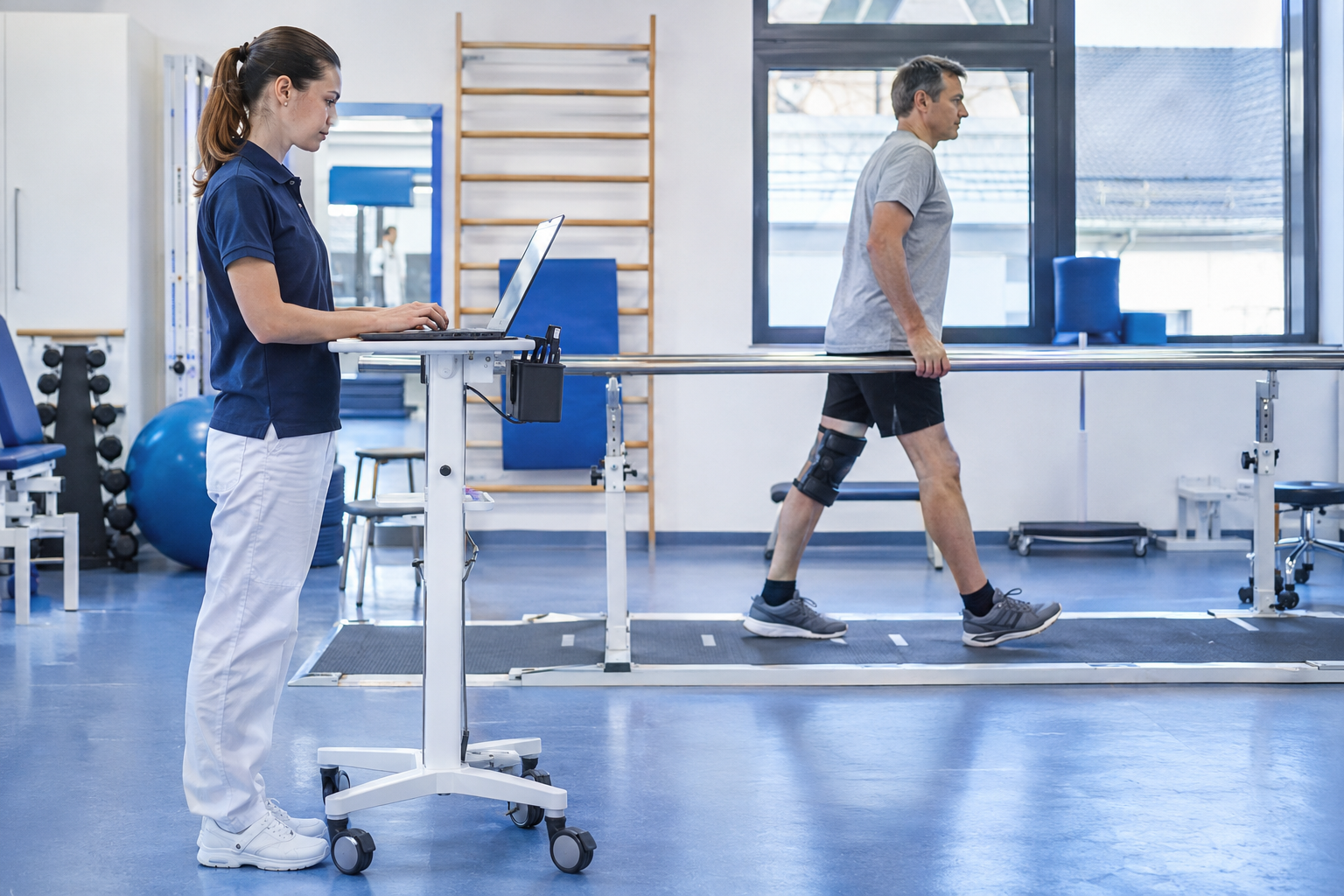
An athlete’s week can look different to each professional involved. The rehabilitation note may describe a controlled session, while another record describes training demands or a reported response afterward. Putting those observations in order helps the team discuss the same period of time.
Sports medicine teams bring together injury history, rehabilitation milestones, recorded training load and the observations of several professionals. A team physician, physiotherapist and strength coach may each see a different part of the athlete’s week.
Oliver, C3’s AI assistant, helps organize that documented information for a shared review. The goal is a clearer account of the athlete’s history and progress when the team meets to discuss care.
How Oliver supports this workflow
An injury history in context
Gather the documented injury timeline, relevant assessments and prior rehabilitation notes into a reviewable summary. Dated sources help the team distinguish the original presentation from more recent observations.
Training beside rehabilitation
Bring recorded training-load information and rehabilitation milestones into the same review. Clinicians can explore the relationship between documented activity and symptoms without searching across separate notes.
Updates for the care team
Draft a progress update around the question being discussed, with links back to the supporting record. A physician’s review and a coach’s operational update may require different levels of detail.
Professional decisions stay with the team
Surface the recorded facts and unanswered questions for discussion. Decisions about activity progression, restrictions and return to play remain with the qualified professionals responsible for the athlete.
A practical example to explore
Consider this illustrative workflow; it is not a client case or a reported outcome.
Before a case conference, the team may need to reconstruct when symptoms were documented, what training was recorded and which rehabilitation milestones were reached. A recent test result means more when the surrounding timeline is available.
A starting question for Oliver: “Compile this athlete’s documented injury timeline and rehabilitation milestones for the team review.”
Choose the injury episode and review dates so information from a previous episode is not blended into the current discussion.
Organize the recorded load, symptoms and milestones by date, retaining which professional supplied each observation.
Identify missing context and questions for the team. An undocumented training session should not become an assumed rest day.
Making the information useful in practice
A useful timeline also distinguishes an earlier restriction from the current documented plan. Carrying old wording forward without its date can create confusion. Before a team meeting, identify the question being discussed and include the records that help answer it. A briefing for clinical colleagues may need detail that does not belong in a coach’s update. Thoughtful preparation supports both coordination and appropriate communication, while the professionals responsible for the athlete retain decisions about progression and participation.
Can an AI summary clear an athlete to return to sport?
No. A summary can organize the documented history and rehabilitation milestones. Return-to-sport decisions require the assessment and judgment of the qualified professionals responsible for the athlete.
Explore the workflow with C3 and Oliver
Bring an athlete-review template and a question about the recorded rehabilitation timeline to a focused Oliver demo. We can explore the workflow using illustrative records and discuss how it fits your team.